
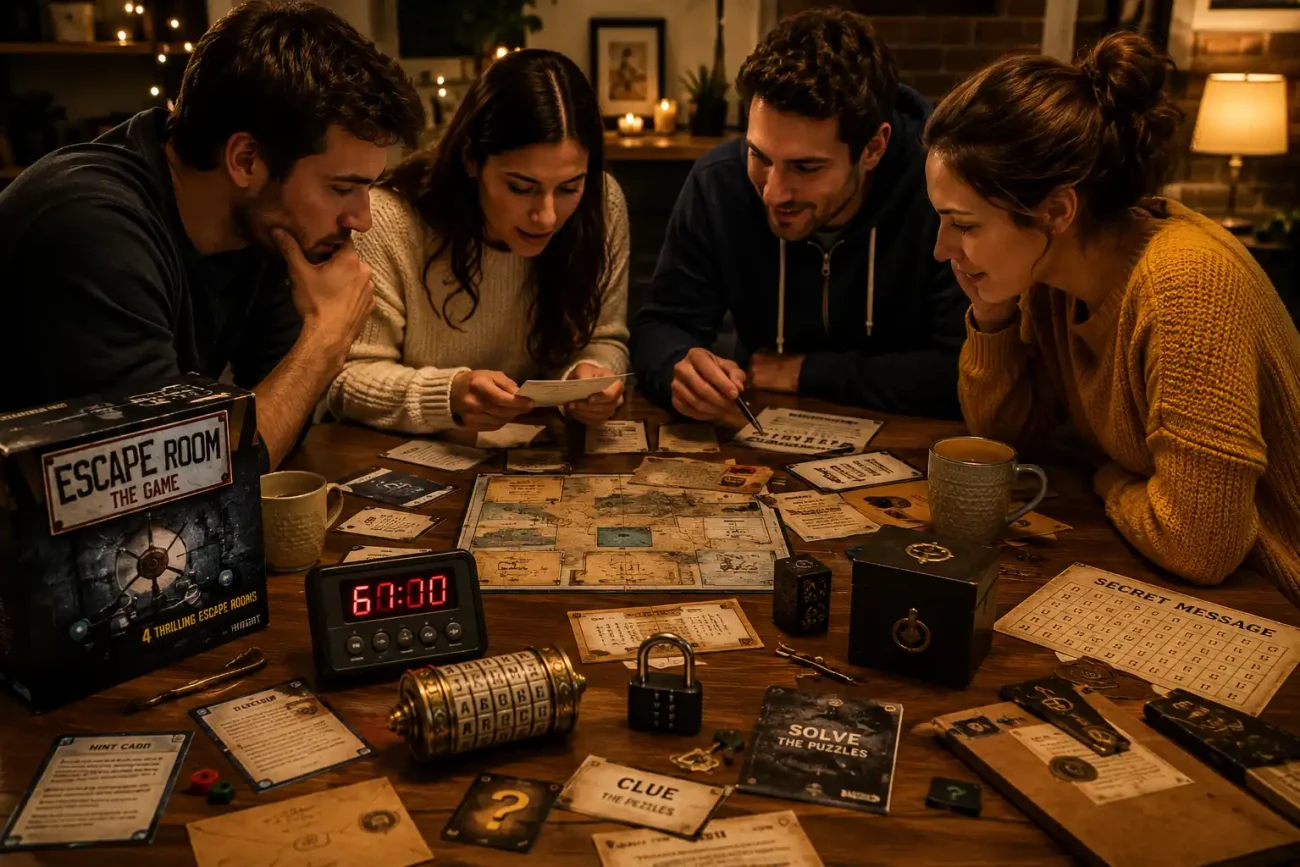
Escape room board games at home have become one of the most exciting ways to enjoy cooperative entertainment without leaving the house. Instead of traveling to a physical escape room venue, you can gather friends or family around a table and solve clues, crack hidden codes, unlock mysteries, and race against the clock. These games combine storytelling, logical thinking, teamwork, and problem-solving into a single experience that feels immersive from beginning to end.
Unlike traditional board games where players often compete against one another, escape room games encourage everyone to work toward the same goal. Every clue uncovered leads to another puzzle, creating suspense and excitement that keeps players engaged throughout the adventure.
Whether you’re planning a family game night, a birthday celebration, a date night, or simply looking for a unique weekend activity, escape room board games offer countless hours of memorable entertainment.
Why More People Are Choosing Escape Room Games at Home
Home entertainment has evolved dramatically over the past few years. While movies and video games remain popular, many people now prefer interactive activities that involve conversation, collaboration, and critical thinking.
Escape room board games perfectly fill this gap because they offer:
- Cooperative gameplay instead of competition
- Engaging storylines
- Challenging puzzles
- Screen-free entertainment
- Great replay memories with different groups
- Suitable options for almost every age group
- Affordable alternatives to physical escape rooms
Instead of watching a story unfold, players actively become part of it.
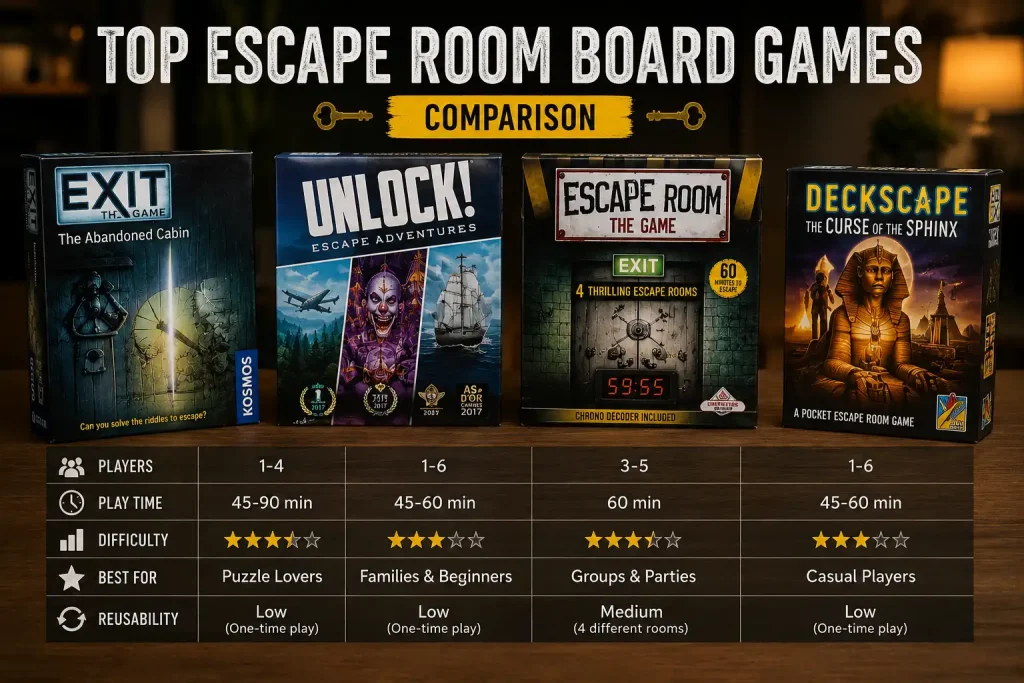
What Makes an Escape Room Board Game So Different?
At first glance, these games may resemble ordinary tabletop games. However, the gameplay is entirely different.
Most escape room board games place players inside a fictional scenario where they must complete a mission before time runs out. Each puzzle solved reveals new information, hidden compartments, codes, or clues that gradually lead toward escaping the room or completing the story.
Common objectives include:
- Escaping a haunted mansion
- Solving a mysterious murder
- Preventing a disaster
- Recovering stolen treasure
- Stopping a dangerous experiment
- Escaping an abandoned prison
- Exploring ancient ruins
The journey feels like starring in your own mystery movie.
Essential Features That Create an Amazing Escape Room Experience
Not every puzzle game delivers the same level of excitement. The best escape room board games share several important qualities.
Immersive Storytelling
A compelling narrative keeps players emotionally invested throughout the game. Rather than solving random puzzles, every clue should contribute to a larger mystery.
Great stories often include unexpected plot twists, hidden villains, secret locations, and surprising endings.
Clever Puzzle Design
High-quality games present a wide variety of challenges instead of repeating the same puzzle style.
Players may encounter:
- Number sequences
- Word puzzles
- Visual riddles
- Hidden symbols
- Cipher decoding
- Object matching
- Pattern recognition
- Logic challenges
- Mathematical clues
- Observation puzzles
This variety keeps gameplay exciting from beginning to end.
Cooperative Gameplay
Escape room games are designed to encourage communication.
One player might discover a hidden symbol while another notices a matching clue elsewhere. Success depends on sharing information effectively.
This cooperative style makes these games ideal for families, friends, classrooms, and team-building events.
Progressive Difficulty
The best games gradually increase the challenge.
Early puzzles introduce players to the game’s mechanics, while later challenges require combining clues from multiple sources. This progression creates a satisfying sense of accomplishment.
Different Styles of Escape Room Board Games
Not every escape room game follows the same formula. Understanding the different categories helps you choose one that matches your group’s preferences.
Story-Driven Adventures
These games focus heavily on narrative.
Players uncover chapters of a larger story while solving puzzles that reveal new locations and characters.
Best for:
- Mystery lovers
- Story enthusiasts
- Families
- Weekend game nights
Detective Mystery Games
Instead of escaping a room, players investigate crimes by collecting evidence and interviewing suspects.
These games reward observation and logical reasoning more than speed.
Ideal for:
- Adults
- True crime fans
- Detective enthusiasts
Horror Escape Games
Designed to create suspense and tension, horror-themed games feature haunted houses, abandoned hospitals, cursed artifacts, or supernatural mysteries.
These games often include atmospheric artwork and darker storylines.
Adventure and Treasure Hunts
Adventure-themed escape games send players searching for hidden relics, ancient temples, pirate treasure, or lost civilizations.
These games emphasize exploration as much as puzzle solving.
Family-Friendly Escape Games
Designed with younger players in mind, these games include easier puzzles, colorful artwork, and lighter themes.
Parents and children can comfortably solve challenges together without becoming overwhelmed.
Comparing Popular Escape Room Board Game Styles
| Game Style | Difficulty | Story Focus | Best Players | Average Play Time |
|---|---|---|---|---|
| Mystery Investigation | Medium | High | Adults | 90–150 minutes |
| Family Adventure | Easy | Medium | Families | 60–90 minutes |
| Horror Escape | Hard | Very High | Adults | 120 minutes |
| Treasure Hunt | Medium | High | Mixed Groups | 90 minutes |
| Detective Case Files | Medium-Hard | Very High | Couples & Friends | 90–180 minutes |
| Fantasy Adventure | Medium | High | Teens & Adults | 75–120 minutes |
How to Choose the Right Escape Room Board Game
Selecting the perfect game depends on more than simply reading the box.
Ask yourself several questions before purchasing.
How Many People Will Play?
Some games are optimized for two players, while others work best with larger groups.
A game designed for six players may feel too easy with only two participants.
What Experience Level Does Your Group Have?
Beginners usually enjoy straightforward puzzles with clear instructions.
Experienced puzzle enthusiasts often prefer games featuring hidden mechanics, advanced riddles, and multiple solution paths.
How Much Time Do You Have?
Escape room games vary significantly in length.
Some adventures finish within an hour, while others can easily last two or even three hours.
Choosing the appropriate length ensures everyone stays engaged until the end.
Do You Want Replay Value?
Certain escape room games can only be completed once because puzzles are permanently altered.
Others include reset mechanisms that allow repeated play with different groups.
Understanding this difference helps determine long-term value.
The Skills You’ll Naturally Develop While Playing
One reason escape room board games continue growing in popularity is that they combine entertainment with learning.
Players regularly improve valuable skills without even realizing it.
These include:
- Critical thinking
- Logical reasoning
- Observation
- Pattern recognition
- Team communication
- Leadership
- Creative problem-solving
- Memory
- Time management
- Decision-making
Children, teenagers, and adults all benefit from these mental exercises while having fun.
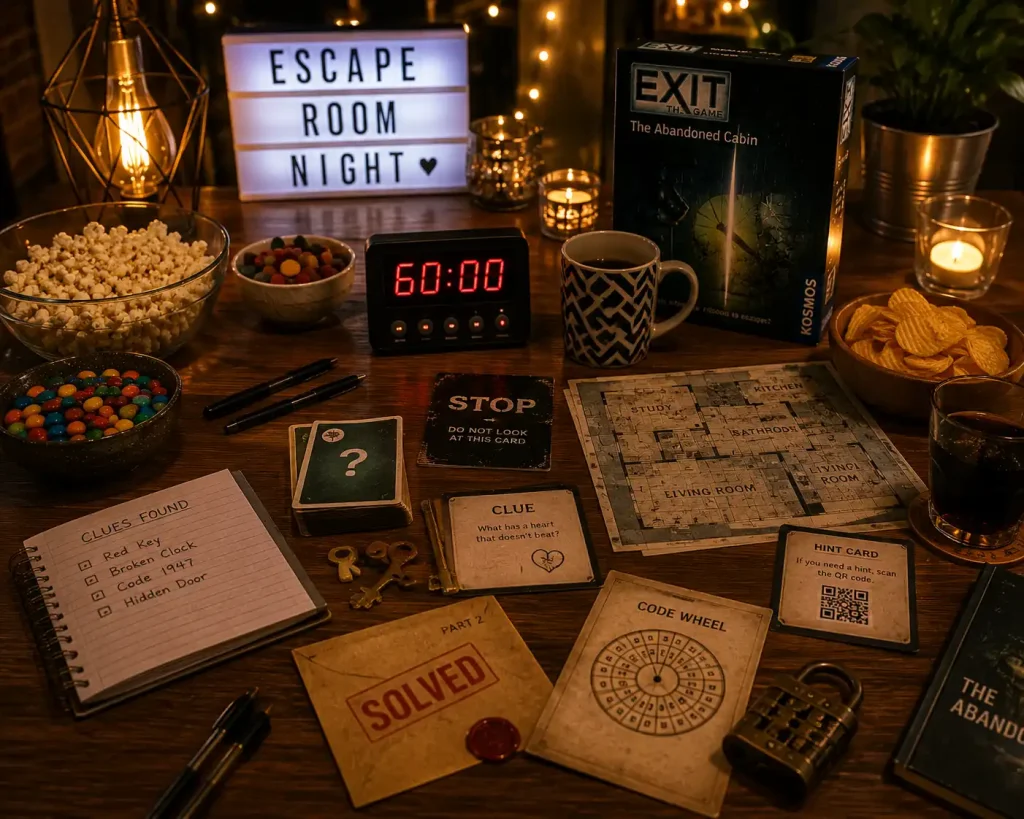
Why Escape Room Games Make Excellent Family Activities
Many families struggle to find activities that everyone genuinely enjoys.
Escape room board games solve this problem by encouraging collaboration rather than competition.
Instead of arguing over who wins, everyone celebrates together after solving the final puzzle.
Parents appreciate the educational value, while children enjoy feeling like real detectives or adventurers.
The result is an activity that strengthens communication and creates lasting memories.
The Best Escape Room Board Games for Different Types of Players
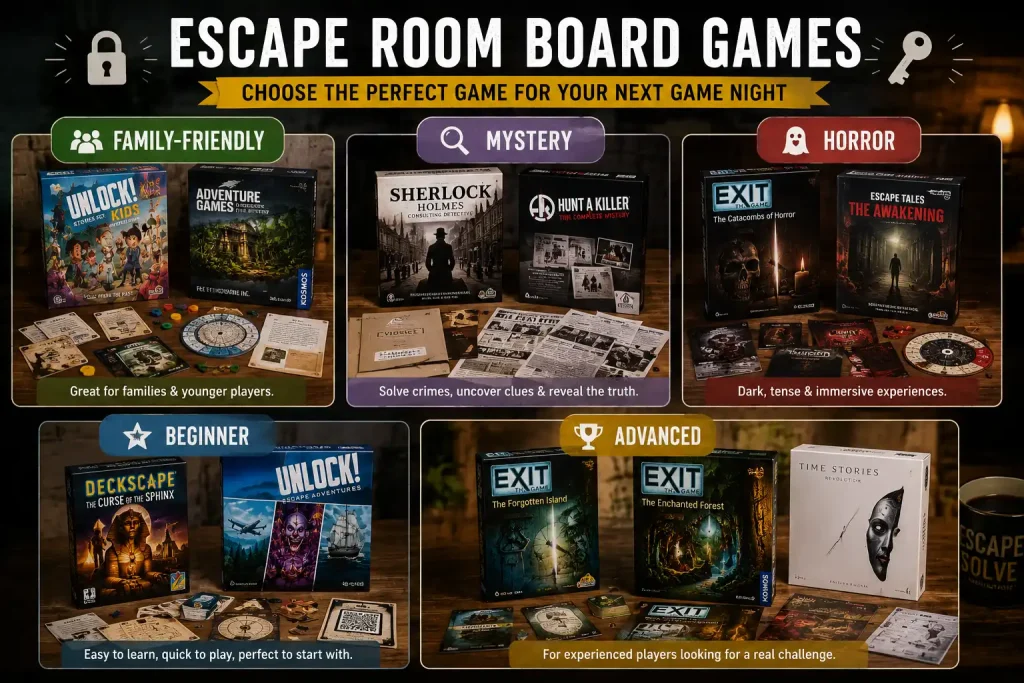
Not every escape room board game delivers the same experience. Some emphasize storytelling, while others focus on brain-teasing puzzles or cinematic adventures. Choosing a game based on your group’s preferences makes the experience much more enjoyable.
Best for First-Time Players
If you’ve never played an escape room board game before, start with a beginner-friendly title that introduces puzzle mechanics gradually. Games with clear instructions and moderate difficulty help new players understand how clues connect without feeling overwhelmed.
Look for games that feature:
- Simple rulebooks
- Helpful hint systems
- Linear puzzle progression
- Shorter play sessions
- Cooperative gameplay
These games build confidence while still offering satisfying challenges.
Best for Puzzle Enthusiasts
Experienced players often prefer games that demand careful observation and advanced logical thinking. These adventures typically include layered puzzles, hidden clues, and unexpected twists that require teamwork and patience.
A challenging puzzle game rewards players who enjoy analyzing every detail before making decisions.
Best for Families
Family-friendly escape room games balance accessibility with fun. They avoid overly complex riddles while encouraging children and adults to contribute equally.
Features to look for include:
- Age-appropriate themes
- Bright artwork
- Moderate difficulty
- Short gameplay sessions
- Educational puzzle elements
These games help children practice reasoning, communication, and teamwork in an enjoyable setting.
Best for Couples
Escape room board games also make excellent date-night activities. Working together to solve mysteries encourages communication, collaboration, and shared excitement.
Couples often enjoy narrative-driven adventures where every puzzle moves the story forward.
Best for Large Groups
When hosting several friends, choose games that allow everyone to participate. The best large-group experiences include enough puzzles for multiple people to work on simultaneously instead of waiting for one player to finish.
Planning an Amazing Escape Room Game Night
Turning an ordinary evening into a memorable escape room adventure requires only a little preparation.
Create the Right Atmosphere
A few simple changes can dramatically improve immersion.
Consider:
- Dimming the lights
- Playing background music
- Removing distractions
- Organizing a clean playing area
- Keeping snacks nearby
- Setting a visible timer
These details help everyone feel like they’re stepping into the game’s world.
Read the Rules Before Everyone Arrives
Nothing interrupts the excitement faster than spending twenty minutes reading instructions after players are seated.
Learning the setup beforehand allows the adventure to begin immediately.
Assign Helpful Roles
Although everyone should solve puzzles together, assigning informal responsibilities keeps gameplay organized.
For example:
- One player records discovered clues.
- Another manages puzzle pieces.
- Someone keeps track of solved challenges.
- Another monitors the timer.
Clear organization prevents important information from being overlooked.
Common Puzzle Types You’ll Encounter
Escape room board games rarely repeat the same challenge over and over. Variety keeps players engaged from beginning to end.
Logic Puzzles
Players analyze information to eliminate impossible answers and identify the correct solution.
Hidden Object Challenges
Tiny symbols, illustrations, or patterns may reveal important clues when examined carefully.
Observation often proves just as valuable as intelligence.
Word Games
Letters, phrases, and coded messages frequently hide passwords or combinations needed to continue the adventure.
Number-Based Challenges
Mathematical reasoning appears in many escape games through sequences, coordinates, or numerical locks.
Fortunately, these puzzles usually rely more on logic than advanced mathematics.
Pattern Recognition
Players compare shapes, colors, symbols, or arrangements to identify hidden relationships.
Attention to detail often becomes the key to success.
Mistakes That Can Prevent Your Team from Escaping
Even experienced players occasionally overlook simple details.
Avoid these common mistakes.
Ignoring Small Clues
Many puzzles include subtle hints that seem unimportant at first.
Examine every card, illustration, and object carefully before moving on.
Rushing Too Quickly
Fast decisions sometimes create unnecessary confusion.
Taking a moment to discuss ideas often saves valuable time later.
Keeping Discoveries to Yourself
Escape room games reward communication.
Whenever you notice something unusual, mention it immediately.
Your observation might solve another player’s puzzle.
Overthinking Simple Answers
Not every challenge hides an elaborate trick.
Sometimes the obvious solution really is correct.
Forgetting Earlier Clues
Many games revisit information introduced at the beginning.
Review previous discoveries whenever progress slows.
Should You Use Hints?
Some players believe using hints reduces the satisfaction of finishing an escape room.
In reality, hints simply keep the adventure moving.
If your group remains stuck for fifteen or twenty minutes, using a carefully designed hint often restores momentum without spoiling the entire experience.
The goal is to enjoy the story rather than become frustrated.
Single-Use vs Replayable Escape Room Games
One of the biggest questions buyers ask is whether escape room board games can be played more than once.
The answer depends on the game’s design.
Single-Play Games
Many puzzle games require writing on cards, folding materials, or revealing hidden information.
Once completed, players already know the solutions, making future playthroughs less exciting.
Advantages include:
- Strong storytelling
- Clever surprises
- Memorable endings
- Highly immersive puzzles
Replayable Games
Some publishers create games that reset after completion.
These versions allow different groups to enjoy the same adventure multiple times.
They’re especially useful for families and board game collections.
Physical Escape Rooms vs Board Games at Home
Both experiences offer unique advantages.
| Feature | Escape Room Board Games | Physical Escape Rooms |
|---|---|---|
| Cost | Lower long-term expense | Higher per visit |
| Travel Required | No | Yes |
| Play Anytime | Yes | Reservation needed |
| Group Size | Flexible | Fixed limits |
| Setup | Simple | Professionally designed |
| Replay Value | Depends on the game | Usually one visit |
| Comfort | Home environment | Commercial venue |
While physical escape rooms provide elaborate environments, home games offer flexibility, convenience, and affordability.
Building Your Own Escape Room Collection
Many enthusiasts eventually collect several escape room board games instead of owning only one.
A balanced collection might include:
- One beginner-friendly adventure
- One detective mystery
- One horror-themed game
- One family puzzle game
- One advanced challenge
- One replayable title
This variety ensures there’s always a suitable option for different guests and occasions.
How Escape Room Games Improve Teamwork
One reason businesses use escape room activities during team-building events is their ability to encourage effective collaboration.
Players naturally learn to:
- Share ideas openly
- Listen carefully
- Divide responsibilities
- Think creatively
- Solve problems together
- Support each other’s strengths
These same benefits make escape room board games valuable for families, classrooms, and groups of friends.
Budget-Friendly Tips for Growing Your Collection
Building a collection doesn’t have to be expensive.
Consider these money-saving ideas:
- Watch for seasonal sales.
- Exchange completed games with friends.
- Join local board game communities.
- Buy bundle deals.
- Look for replayable editions.
- Borrow games before purchasing.
With a little planning, you can enjoy a wide variety of adventures without overspending.
Are Escape Room Board Games Worth Buying?
For many players, the answer is yes.
Compared to many forms of entertainment, escape room board games provide an engaging combination of storytelling, puzzle-solving, and cooperative fun. Whether you’re hosting a family gathering, planning a game night with friends, or looking for a unique indoor activity, these games offer experiences that are both entertaining and mentally rewarding.
Rather than relying on fast reflexes or luck, success comes from observation, communication, and creative thinking. Every completed puzzle feels like a shared achievement, making the final solution especially satisfying.
A Complete Buying Guide for Escape Room Board Games
Shopping for an escape room board game can feel overwhelming because there are dozens of options with different themes, mechanics, and difficulty levels. Instead of choosing based solely on the cover artwork, compare the features that will have the biggest impact on your experience.
Player Count
Always check the recommended number of players.
Some games are designed for intimate two-player sessions, while others include enough puzzles for larger groups. Playing with too many or too few people can affect the overall enjoyment.
| Group Size | Recommended Game Style |
|---|---|
| 1 Player | Solo puzzle adventure |
| 2 Players | Detective and mystery games |
| 3–4 Players | Story-driven escape games |
| 5–6 Players | Party escape room games |
| 7+ Players | Team-based cooperative puzzle games |
Difficulty Rating
Difficulty levels vary significantly between games.
Easy
- Great for beginners
- Family-friendly
- Simple puzzle mechanics
- Relaxed gameplay
Medium
- Balanced challenge
- Requires teamwork
- Suitable for most players
- Mix of logic and observation
Hard
- Complex puzzles
- Multiple clue connections
- Longer play sessions
- Best for experienced escape room fans
Choosing the right difficulty keeps everyone engaged without causing unnecessary frustration.
How Long Should an Escape Room Board Game Last?
Game length is another important consideration.
| Available Time | Recommended Game Length |
|---|---|
| 30–45 Minutes | Quick family games |
| 60 Minutes | Casual game night |
| 90 Minutes | Standard escape adventure |
| 120 Minutes | Advanced mystery games |
| 150+ Minutes | Expert-level campaigns |
If you’re introducing new players, aim for games lasting around 60 to 90 minutes.
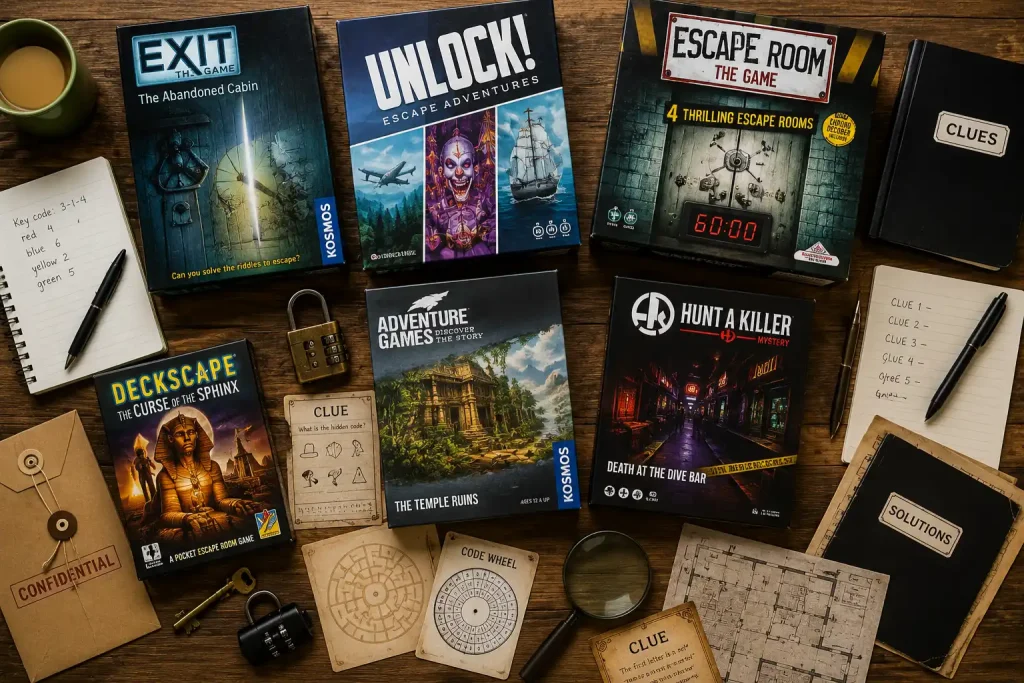
Themes That Keep Players Engaged
One of the biggest attractions of escape room games is the variety of stories available.
Popular themes include:
Haunted Mansions
Search abandoned buildings filled with mysterious secrets, hidden passages, and supernatural clues.
Secret Laboratories
Prevent dangerous experiments, escape locked research facilities, or stop scientific disasters before time expires.
Ancient Civilizations
Discover forgotten temples, solve archaeological mysteries, and uncover legendary treasures hidden for centuries.
Bank Heists
Reverse the traditional escape room formula by planning daring robberies, cracking safes, and escaping before security arrives.
Spy Missions
Decode classified documents, disable hidden devices, and complete high-stakes international missions.
Murder Mysteries
Gather evidence, question suspects, and solve crimes through careful observation and logical deduction.
Changing themes keeps every game feeling fresh, even for experienced players.
Expert Tips to Solve Puzzles More Efficiently
Experienced escape room players often follow simple strategies that improve their chances of success.
Organize Every Clue
Instead of creating random piles, separate clues into categories.
For example:
- Numbers
- Symbols
- Keys
- Maps
- Documents
- Locked items
- Solved puzzles
- Unused components
An organized table makes connections much easier to identify.
Think Out Loud
Verbalizing your observations helps teammates notice details you may have missed.
Many puzzles are solved simply because someone casually mentions an idea that sparks another player’s insight.
Don’t Focus on One Puzzle Too Long
If progress stops, switch to another clue.
Returning later with fresh eyes often reveals the solution almost immediately.
Double-Check Everything
Many games intentionally hide information in plain sight.
Look carefully at:
- Box artwork
- Cards
- Rulebooks
- Maps
- Envelopes
- Puzzle pieces
- Illustrations
- Numbers
- Icons
Small details frequently unlock major breakthroughs.
Hosting an Escape Room Party at Home
Escape room board games work especially well for birthdays, family reunions, holidays, and weekend gatherings.
To create an unforgettable event:
- Prepare the game before guests arrive.
- Decorate the room to match the game’s theme.
- Use background music to build atmosphere.
- Provide themed snacks and drinks.
- Set a visible countdown timer.
- Encourage everyone to participate equally.
- Take a group photo after completing the adventure.
These small touches transform a regular board game into an immersive experience.
Keeping Everyone Involved During Gameplay
Sometimes one player naturally takes control, leaving others with fewer opportunities to contribute.
Encourage balanced teamwork by:
- Rotating clue readers.
- Sharing discovered information immediately.
- Letting different players attempt different puzzles.
- Asking quieter players for ideas.
- Celebrating every solved challenge together.
The best escape room experiences rely on collaboration rather than individual brilliance.
Caring for Your Escape Room Board Games
Proper storage helps preserve game components for future use.
Follow these simple practices:
- Keep cards organized after each session.
- Store pieces in labeled bags.
- Avoid food spills near puzzle materials.
- Protect paper components from bending.
- Replace damaged bags or envelopes when needed.
- Store boxes in a cool, dry location.
Well-maintained games remain enjoyable for years.
Who Will Enjoy Escape Room Board Games the Most?
These games appeal to a surprisingly wide audience.
They’re ideal for:
- Families looking for screen-free entertainment
- Friends hosting regular game nights
- Couples planning creative date nights
- Teenagers who enjoy puzzles
- Adults who love mystery novels
- Teachers introducing classroom challenges
- Companies organizing team-building activities
- Board game collectors seeking cooperative experiences
Because there are so many themes and difficulty levels, nearly every group can find a game that suits its interests.
Frequently Asked Questions
Can one person play an escape room board game?
Yes. Many games include solo modes or work well with a single player, although cooperative games are generally more enjoyable with two or more participants.
Do escape room board games require internet access?
Most physical board games do not. Some modern editions include optional companion apps for hints, sound effects, or timers, but many can be played entirely offline.
Are these games suitable for children?
Yes, provided you choose games with an age rating appropriate for younger players. Family-oriented editions usually feature simpler puzzles and less intense themes.
Can you replay the same game?
It depends on the design. Some games are intended for a single playthrough, while others can be reset and enjoyed multiple times with different groups.
How difficult are escape room board games?
Difficulty ranges from beginner-friendly adventures to expert-level puzzle challenges. Always check the recommended difficulty before buying.
What should you do if your group gets stuck?
Use the game’s hint system if available. Hints are designed to keep the experience enjoyable without revealing every solution.
Final Thoughts
Escape room board games at home offer much more than a typical board game. They combine immersive storytelling, clever puzzle design, and cooperative gameplay to create memorable experiences that bring people together. Whether you’re solving a mysterious crime, escaping a haunted mansion, uncovering ancient secrets, or completing a high-stakes spy mission, every session encourages communication, creativity, and critical thinking.
The best part is that you don’t need a special venue or expensive tickets to enjoy the excitement. With the right game, a comfortable table, and a group ready to work together, your home can become the setting for an unforgettable adventure. From beginners looking for their first puzzle challenge to experienced enthusiasts searching for complex mysteries, there’s an escape room board game that fits every skill level and occasion.
By choosing a game that matches your group’s size, experience, and interests, you’ll create engaging game nights that everyone will remember long after the final clue has been solved.
